
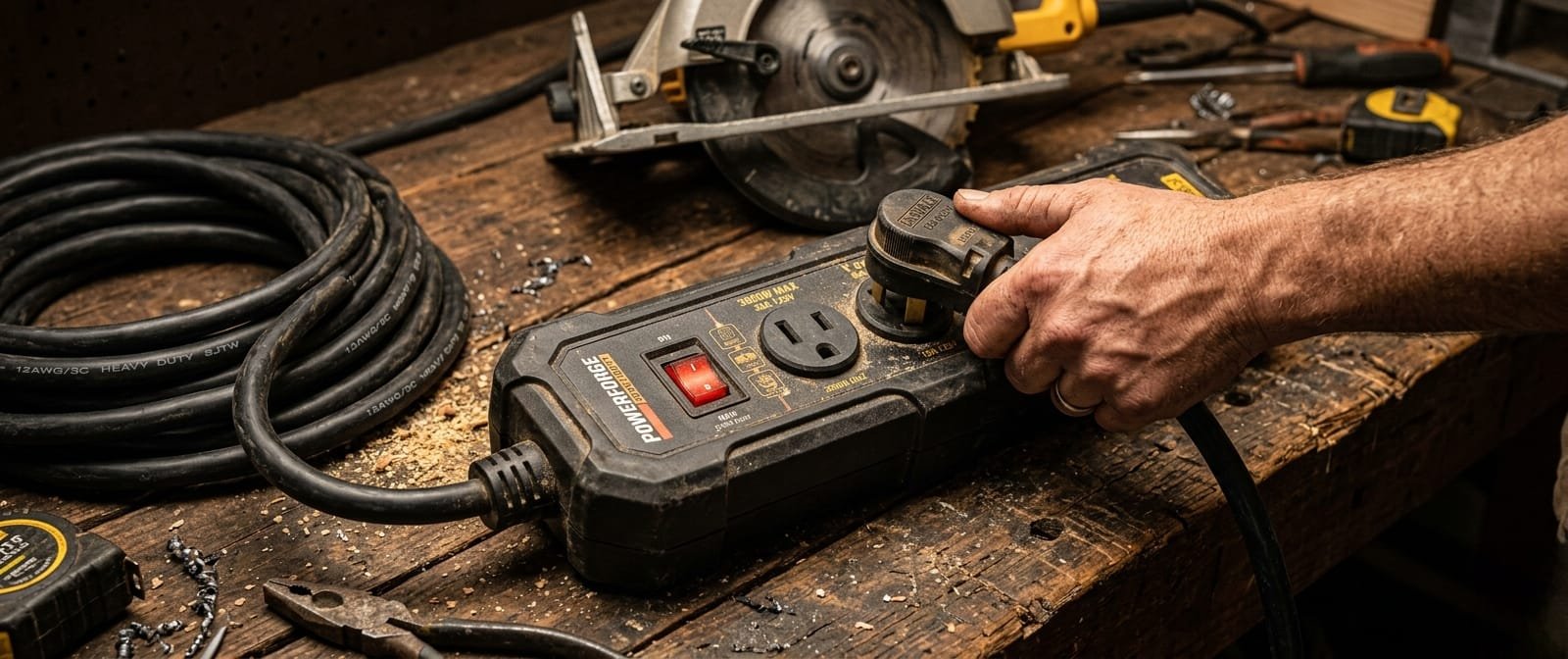
A rugged, industrial heavy duty extension board resting on a wooden workshop bench as a power tool plug is inserted into a high-amperage socket.

Heavy Duty Extension Board: Warmth along the cable often shows up after connecting heavy machines like AC units, portable heaters, or powerful workshop saws to ordinary power strips. Sometimes, things go further – burning plastic scents drift through the air. A sharp click may echo from the wall when the electrical safeguard cuts off power.

Some folks assume every power strip works the same way. But that idea doesn’t hold up. Plugging powerful gear into a thin, store-bought plastic unit often leads to broken machines – or sparks flying. For serious electricity needs, only a strong, built-for-purpose heavy-duty extension board makes sense.

Fixing scorched outlets and fried equipment day after day taught me one thing clear – plugging heavy machines into weak circuits leads straight to disaster. Picture smoke curling from a socket, gears grinding to a halt mid-job. That moment when flickering lights hint at deeper trouble often arrives too late. Stronger cords matter, sure, yet the real fix lives inside the breaker box where wires meet their limits. Boards that hum under pressure instead of giving up reveal quality through silence during storms. Heat builds where connections loosen, so tightness counts more than shiny labels. Machines last longer when juice flows steady without spikes or drops. Peace settles in once you trust every outlet holds firm against surges. Safety hides in details most ignore until sparks fly.

Appliances

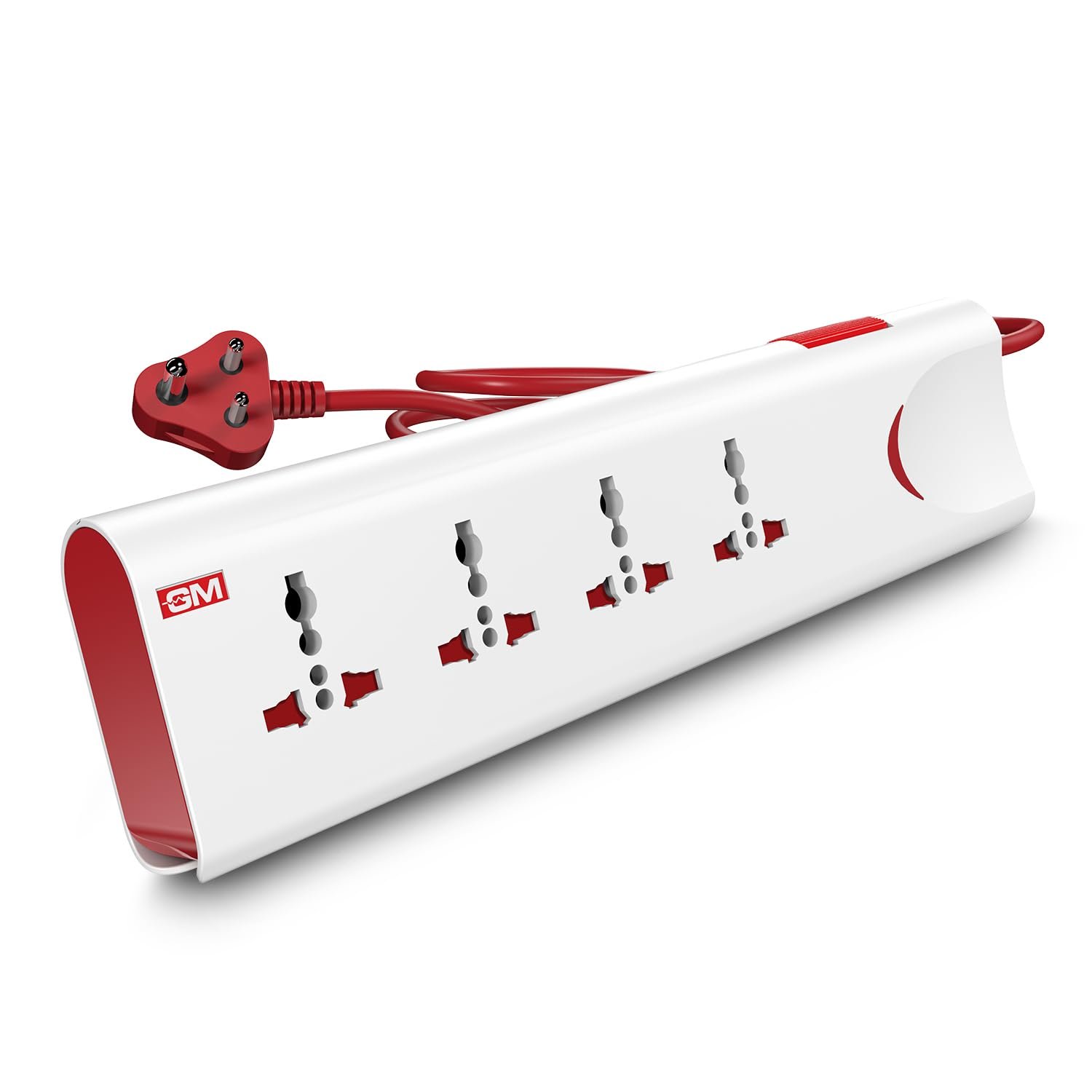
GM 3060 Extension Board 10Amp Output 250 Volts with 2 Mtr Extension Cord & Surge Protector

🔌 4 Universal Sockets – Connect multiple devices with globally compatible sockets for versatile use ⚠️ Thermal Trip Technology – Automatically cuts power during overload or overheating to keep your...

400.00

Defining the Baseline: Standard Strips vs. Heavy Duty Power Boards

To understand why your high-wattage appliances require specialized hardware, we must demystify what happens under the hood of your power distribution gear.

ELECTRICAL LOAD INFRASTRUCTURE MAP
STANDARD EXTENSION STRIPS
HEAVY DUTY POWER BOARDS
– 18 to 16 AWG Thin Wiring
– 14, 12, or 10 AWG Wiring
– Low Amperage (5A – 10A Max)
– High Amperage (15A – 20A)
– Overheats Under Heavy Load
– High Wattage (Up to 4000W)

Standard Extension Strips: Built for Electronics, Not Appliances

A typical power strip works best with gadgets that need little juice – think phone chargers, computers, or small lights. Inside, the wires are slim, much like a thin drinking tube. Pushing heavy loads through them – say, what a microwave pulls – strains the system hard. That strain builds resistance, which turns into serious heat. Over time, that warmth eats away at the wire coating, starting damage deep within.

Heavy Duty Power Boards: Built for Maximum Current Delivery

A real high-capacity power board starts with a unique frame inside. Not just layered parts, but thick copper bars run through it, moving heavy current like water down a wide channel. Outside, the shell isn’t plastic junk – it holds firm while heat builds. Each piece works together, yet stays strong on its own, even after days of constant load. Resistance barely shows up here; things stay cool where they should.

The Core Engineering: Inside a High-Capacity Power Board

To select a board that won’t fail when you need it most, you need to understand the structural standards that define a true industrial-grade power multiplier.

1. The Wire Gauge Paradigm (AWG)

Thick copper inside a tough circuit boardThat detail matters above all elseYou measure it using something called AWG. Funny thing – lower numbers mean fatter wiresSize goes up when the number goes down.

  • Thick copper inside a tough circuit boardThat detail matters above all elseYou measure it using something called AWG. Funny thing – lower numbers mean fatter wiresSize goes up when the number goes down.
  • Heavy wires here – built for loads up to 20 amps. When gadgets run nonstopthese keep going without overheatingThink of big machines that hum all day longpulling steady power. They need solid wiring just to stay safe during daily use. (Heavy Duty Extension Board)
  • Heavy-duty 10 AWG wire handles serious power loadsThink big machines running nonstop in tough shop settingsThis gauge thrives where demand never dropsBuilt for constant high current without overheatingShops with heavy equipment rely on its strength daily.

heavyduty wire lets power move freelyso the cable stays at room temperature during long runs under heavy demandInstead of heating upit handles the load without breaking a sweathour after hour.

2. High-Amperage Sockets and Fire-Retardant Shells

Most folks overlook how a strong power strip fails where it connects. Over days, budget models let go – thin copper bits inside shift apart slowly. Plugs wiggle free because of this slack. Heat sneaks in when tiny sparks jump across gaps. That warmth eats through the outer shell bit by bit. Inside, tough brass grips bite down hard on plug pins thanks to strong springs. Not just any plastic shell outside – this one’s built from top-tier polycarbonate or full steel, tested to resist flames with strict VO-level standards so heat won’t spread through the material.

4 Crucial Features to Vet Before Buying Your High-Wattage Power Strip

Do not choose an extension device based on price or cord length alone. When setting up a commercial kitchen, an EV charging station, or a home workshop, verify these four vital features.

1. Integrated Circuit Breakers with Manual Reset

Every now and then, powerful devices draw more electricity than household circuits are built to handle. Built into top-quality, robust power strips is a safety switch that resets itself after tripping. When demand goes beyond the strip’s amp rating, the mechanism reacts fast – stopping flow right there in just thousandths of a second. This shutdown happens early enough to keep your building’s primary electrical panel from activating its own cutoff.

2. Individual High-Load Shuttered Sockets

When working in dusty workshops or garages, exposed open sockets present a severe safety hazard. Look for boards that feature individual mechanical safety shutters on each outlet. These shutters seal off the internal live contacts unless a plug is actively inserted, keeping out ambient moisture, metal shavings, and sawdust. (Heavy Duty Extension Board)

3. True Overload and Short-Circuit Isolation

When a device has a sudden electrical fault inside, energy might surge backward into the cord plugged into it. Built well, some power strips separate their wires into individual sections. Because of this setup, if one outlet gives way during overload, the problem stays put and does not jump nearby ones.

4. Heavy-Duty Strain Relief Boots

Where the bendy wire meets the hard shell made of plastic or metal, damage often shows up first. Top-tier heavy-duty units add extended rubber guards right there. These shields stop the inner copper wires from folding, shredding, or snapping when dragged across rough surfaces like concrete. Heavy movement happens often – this detail handles it.

Leave a Comment

Your email address will not be published. Required fields are marked *

Scroll to Top