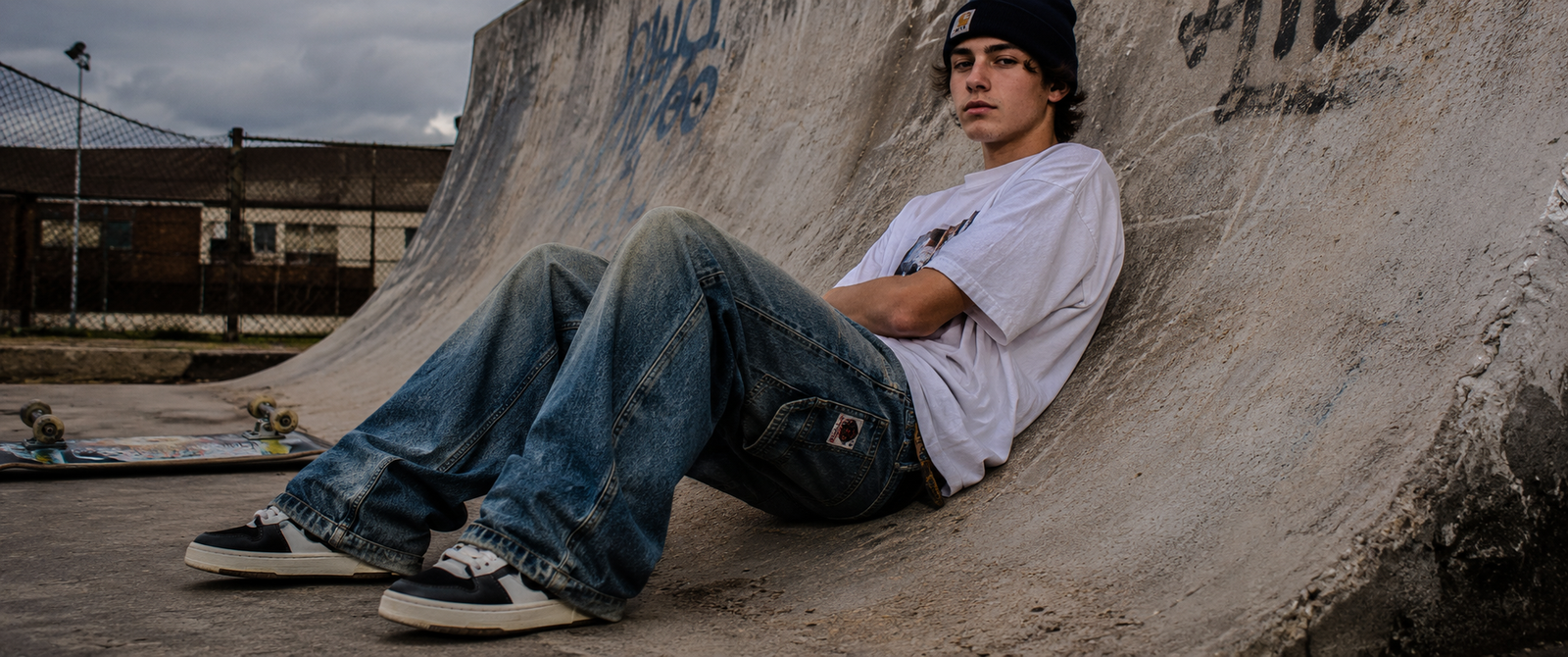
Youth skater leaning against a concrete halfpipe in a skatepark, wearing vintage faded indigo baggy jeans and chunky skate sneakers, captured in a moody 1990s-inspired street portrait with gritty urban lighting.

Baggy Jeans Trend Start: Walk through any big city now, one thing stands out right away – jeans look completely different. Gone are those tight, narrow cuts that everyone wore ten years ago. Instead, wide legs drape low, fabric bunching near the shoes. Shapes hang relaxed, almost careless. What once clung tightly now flows freely.

Out of nowhere, loose trousers seem to have taken over. Yet having studied underground clothing patterns for twenty years, I know this wide-leg wave did not just appear by chance.

Loose jeans didn’t start out as icons – workwear turned heads instead. From factory floors they slipped into gym bags, worn by athletes who needed room to move. Then came the shift: baggy pants began trailing skateboard wheels down city sidewalks. Anger wore them next, voices shouting without words through ripped hems and drooping backsides. Designers watched quietly before copying what already lived on streets. Fabric mills changed gears when orders shifted toward wider cuts. A trend born in sweat became stitched into billboards and storefronts worldwide. Roots dug deep – in playgrounds, protests, underground shows far from glossy runways.

Apparel

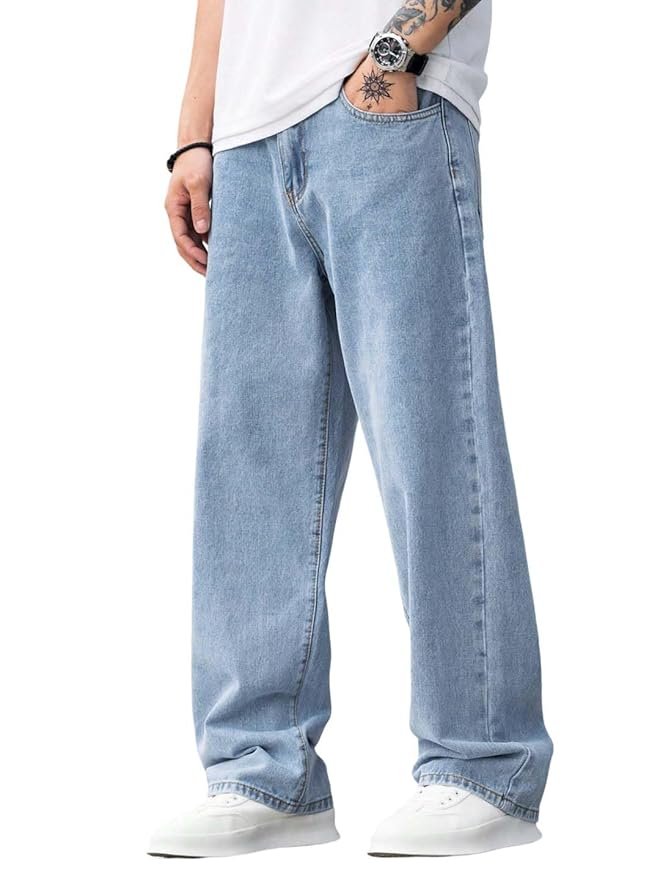
Mens Regular Fit | Classic Design with Stylish Look | Strachable Jeans

Material type: Cotton Blend Length: Standard Length Style: Modern Closure type: Button Occasion type: Wedding, Christmas, Anniversary, Birthday, Valentine's Day Care instructions: Machine Wash Country of Origin: India

460.00

The Historical Blueprint: Pre-90s Subcultural Roots of Wide Trousers

To truly understand how oversized denim fashion started, we have to look past the 1990s and examine earlier historical eras that experimented with volume as a tool of cultural expression.

1. The 1920s Oxford Bags

Out of nowhere, wide-legged pants began showing up at Oxford University during the 1920s. Students there started wearing what they called “Oxford Bags,” baggy flannel trousers that could be nearly forty inches wide at the bottom. Because they needed to pull clothes on fast, these trousers fit right over their sporty knee-length shorts. Soon enough, dressing like this wasn’t just practical – it became a quiet act of defiance toward rigid campus fashion rules.

2. The 1930s and 40s Zoot Suit Movement

Later on, young people of Black, Italian, and Mexican descent in America began wearing the Zoot Suit. With pants that sat high on the waist and had deep folds, they widened around the upper leg then narrowed sharply near the feet. At a time when cloth was limited due to war needs, using so much material felt like defiance. That look claimed presence, signaled belonging, stood apart from what most others accepted as normal.

The Core Catalyst: How the Baggy Jeans Trend Start Was Born in the Streets

Baggy jeans didn’t just appear out of nowhere. They took shape when loose pants from past eras met a fresh moment in the late eighties and early nineties. A shift unfolded, not through fashion houses but on city streets. Hip-hop brought rhythm, attitude, voice. Skate culture added motion, rebellion, grit. Together – through music, movement, defiance – they pushed denim into new space.

1. The Hip-Hop Blueprint and the Golden Era

Back then, in the late eighties, breakdancers across New York started wearing big athletic gear – loose jackets, roomy track pants, baggy cargo bottoms. Freedom came first; bodies had to twist, drop, spin without fabric ripping mid-move.

When hip-hop hit its peak in the early Nineties, big jeans landed on screens everywhere through figures like Tupac Shakur, Kriss Kross, and Run-D.M.C. Oversized denim turned into a look that stood for city life, realness – seen on stages, videos, streets. What started underground soon shaped how youth dressed far beyond neighborhoods where it began. (Baggy Jeans Trend Start)

Out on the corners, a new way of wearing pants started showing up. Not tied tight, never held by a belt – just hanging low like those worn inside jail walls. What began as enforced dress became something chosen, almost defiant. Worn loose not because there was no choice, but because it meant something now. The shape stayed the same, yet the meaning flipped entirely.

Apparel

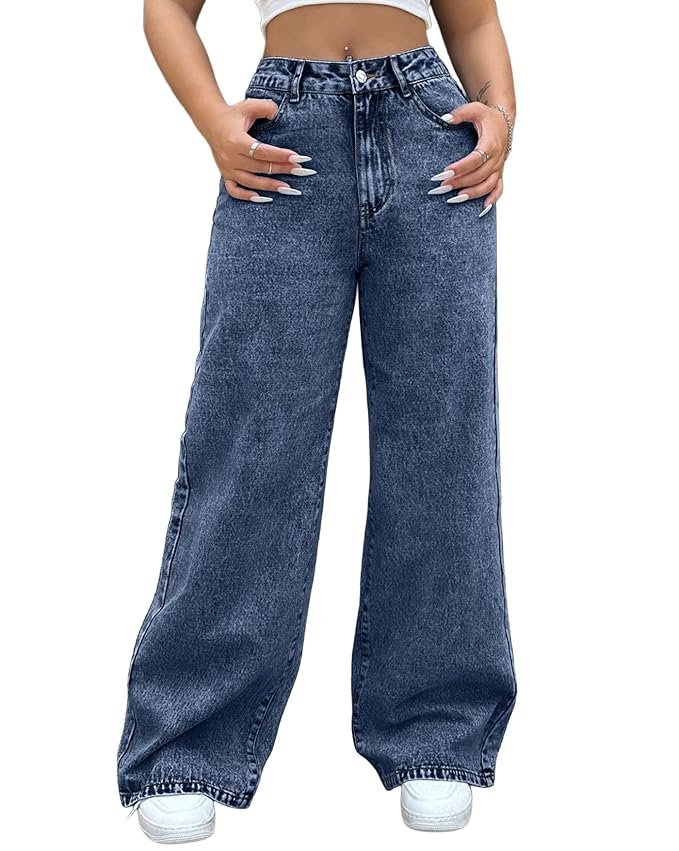
AUSK Women's Relaxed Fit High Rise Jeans || Woman Jean's || Women Baggy Jeans

Material type: Cotton Length: Standard Length Style: Modern Closure type: Button Occasion type: New Year, Christmas, Bachelor Party, Anniversary, Birthday Care instructions: Machine Wash Country of Origin: India

539.00

2. The Skateboarding Revolution and Functional Rebellion

Out west, while waves crashed loud, skaters ditched the bright spandex they once lived in. Instead of clinging to ’80s looks, they reached for looser fits without saying much about it. (Baggy Jeans Trend Start)

Out on the pavement, doing spins off rails or launching across empty pools, meant needing pants tough enough to handle scrapes yet loose where it mattered – hips and legs free to twist any way they had to. Not just any fabric held up under such punishment. Companies stepped in: first Blind, then World Industries jumped, followed by others who focused only on this kind of gear, like JNCO. These weren’t your average trousers. Built wide, stitched thick, made to drag hard against rough ground without tearing – and at the same time, built a wall between those rolling down alleys and everyone else standing still.

From Underground Subculture to Corporate Commercialization

By the mid-1990s, the massive demand from street subcultures forced major corporate fashion houses to completely rethink their design portfolios. The underground trend had officially broken through to the mainstream.

1. The Entry of Heritage Retailers1. The Entry of Heritage Retailers

Turns out, shoppers weren’t reaching for those old straight cuts anymore – Gap, Old Navy, and Levi’s saw it first. So they moved fast, filling stores with looser jeans, roomier fits taking up more shelf space than before.

At the same time, Tommy Hilfiger changed fashion with a fresh take on urban prep style. Big loose jeans met sharp white dress shirts – embroidered, tidy, deliberate – in his line. The mix brought high-end flair into streetwear through contrast instead of compromise.

2. The Industrial Impact on Heritage Denim Brands

Out of nowhere, wider pants began dominating store shelves. Those old-school labels stuck with narrow cuts? They felt the hit right away in their bank accounts.

Take Levi’s, the jeans powerhouse – they held back when young buyers started craving baggier fits. Because they waited too long, their revenue slipped nearly one in six dollars across two tough years. That dip made it obvious: loose styles weren’t vanishing – they’d taken control.

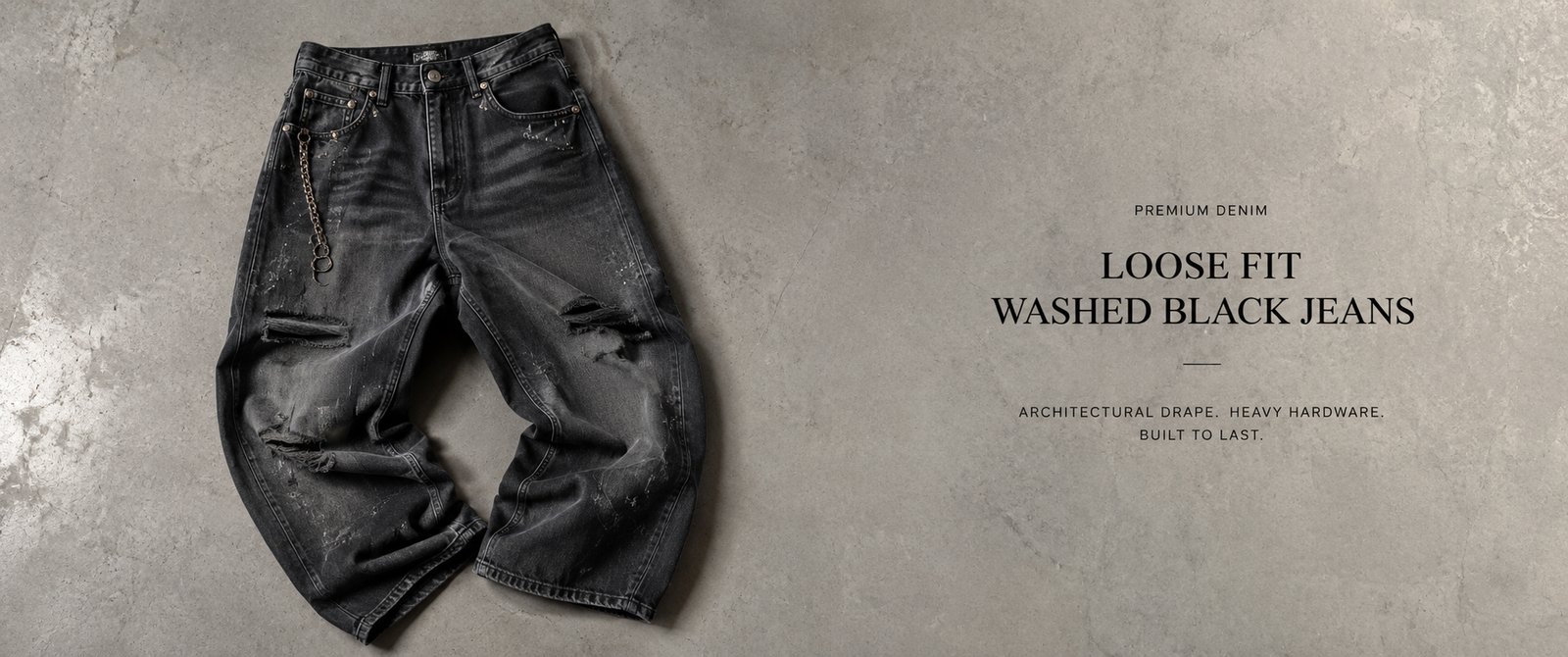
Premium washed black loose fit jeans displayed in a high-end fashion editorial flat lay on a concrete studio floor, featuring architectural draping, distressed detailing, and metal hardware accents.

Why the Modern Oversized Movement Resonates Today

Twenty years tends to spark fashion repeats. When the 2020s arrived, styles from the late Nineties and early Two Thousands suddenly flooded back into view – Y2K looks leading the shift.

Comfort now shapes fashion more than ever, though. Wide-leg jeans have returned, yet they carry meaning beyond past trends. A global health crisis changed how people choose clothes, shifting preferences strongly. Rigid office outfits lost appeal fast when staying home became routine. Loose clothing gained ground instead, feeling natural for daily life indoors. (Baggy Jeans Trend Start)

Out of nowhere, loose cuts have returned – not as throwbacks but quiet upgrades. Designers now mix relaxed roots from past decades with sharp finishes that feel deliberate. Roomy through hips and upper legs, these pants allow space without shouting about it. They adapt easily, worn by anyone shaping identity through clothing, no labels needed.

The Professional Verdict: A Permanent Wardrobe Architecture

Out of nowhere, loose-fitting jeans began spreading through neighborhoods without permission from fashion houses. Street corners saw them first – worn because they fit well, lasted long, moved easily. Young crowds adopted them not for looks alone but for room to live in them. These pants gained ground not by slogan or strategy, yet through daily wear and quiet rebellion. Look back far enough and one truth shows up – their roots aren’t found in glossy magazines or price tags. They belong to sidewalks, subway rides, late-night walks under dim lights. What seems like just fabric carries years of real movement, real choices. Their shape stays steady while everything else changes around it.

Leave a Comment

Your email address will not be published. Required fields are marked *

Scroll to Top